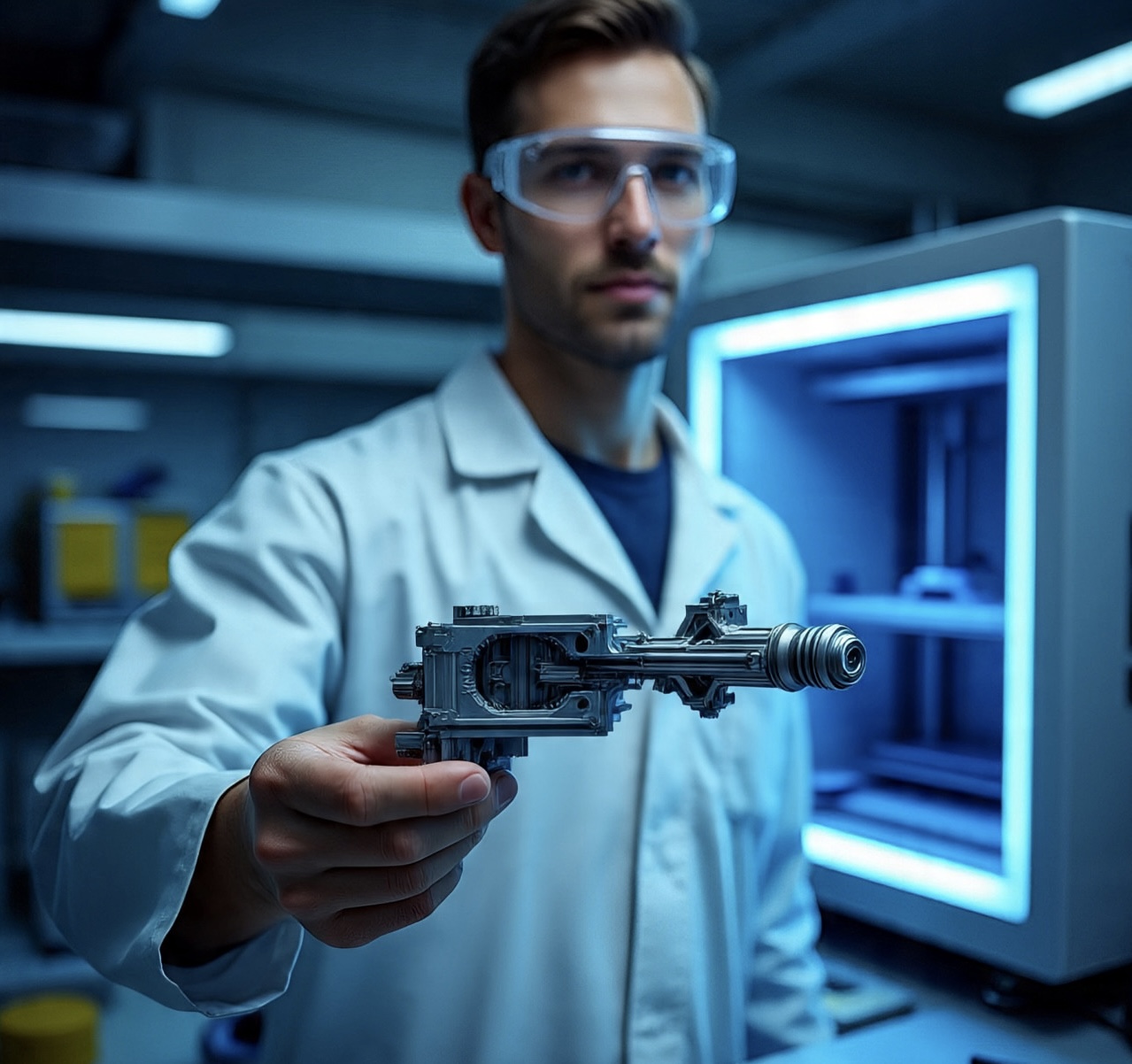
Additive Manufacturing in 2026: Prototype to Production
The world of manufacturing is transforming in a big way. In 2026, 3D printing innovations are shifting additive manufacturing beyond a basic rapid-prototyping tool to become a workhorse for high-volume industrial production. Leading factories are exchanging slow, small-batch setups for automated, continuous printing lines. The ability to scale is now possible, thanks to faster printing speeds and increasingly sophisticated materials.
Technological Catalysts
Production at scale demands fast throughput and high volumes. The hardware used in modern factories has evolved in response to these demands, through two primary technologies:
- Multi-Laser Powder Bed Fusion (LPBF): Today’s systems utilize simultaneous 12-laser operation, reducing build times by more than 60% and lowering per-unit cost through economies of scale.
- Continuous Liquid Interface Production (CLIP): This resin-based technology enables high build volumes and rapid cure times. These systems can deliver thousands of end-use parts per day, on par with traditional injection molding for mid-volume runs.
AR on the Factory Floor
The speed of hardware is but one piece of the puzzle. Today’s factory floors depend on smart digital tools to prevent production hiccups. An operator can monitor 3D printing quality in real time with ARK augmented reality. This integrated, IoT-acquainted system projects real-time sensor data and assembly assistance directly onto the physical machines. It enables technicians to identify defects in real time and read spatial repair instructions without taking their eyes off where they’re working, which drastically reduces machine downtime.
Industry Impact: Cost and Lead Time
This even extends to the betterment of technology that alters the financial math. Here’s how mass-scale 3D printing stacks against traditional CNC machining for complex geometry parts in 2026.
| Production Metric | Traditional CNC Machining | Additive Manufacturing (2026) |
| Cost per unit (Complex part) | High (Requires custom fixtures) | Medium to Low |
| Lead time for tooling | 2 to 4 weeks | 0 days (No tooling required) |
| Waste material | Up to 80% (Subtractive) | Less than 5% (Additive) |
| Design flexibility | Limited by cutting tool access | Near limitless |
Material Science Breakthroughs
No production-grade parts can be made without production-grade materials. The possibilities for employing additive manufacturing have grown exponentially:
- Aerospace-Grade Alloys: Manufacturers can now mass-produce turbine blades and engine brackets using lightweight titanium and Inconel alloys. These metals deal with intense stress and heat.
- Diagnostic devices: High-performance materials such as PEEK and PEKK are displacing heavy-metal components in the automotive and medical industries. The materials are resistant to extreme temperatures and chemicals, making for highly durable printed parts.
Sustainable Scaling
Mass production typically depends on enormous shipping networks. This paradigm shift comes from additive manufacturing (AM), which allows localized production hubs. Rather than shipping physical components around the world, firms send digital files to local 3D-printing factories. This strategy has reduced carbon footprints in global supply chains by eliminating transportation emissions and the need for massive, climate-controlled warehousing.
The Future of Autonomous 3D Printing Factories
The means of high-volume additive manufacturing has arrived. Factories are becoming more autonomous as AI, multibeams, and advanced polymers collide. Machines will soon self-predict their maintenance needs and adjust print parameters on the fly without any human intervention. Manufacturers that implement these scalable technologies today will have a tremendous competitive advantage tomorrow.
FAQs
What is the average ROI timeline for industrial 3D printers in 2026?
Most manufacturers realize a payback on their investment within 18 to 24 months, with savings from eliminated tooling costs and reduced material waste.
Are 3D printed parts durable enough for end-use production?
Yes. Additive manufacturing enables the creation of advanced materials, such as titanium and high-performance polymers, that can provide tensile strength and thermal resistance that are at least as high as, or far surpass, those of traditional manufacturing standards.
How do factories implement augmented reality?
Factories employ spatial mapping systems and smart glasses to overlay real-time data onto machines. To make that happen, it first needs to be mapped in 3D and be integrated into a secure cloud.
Does additive manufacturing replace CNC machining entirely?
No. CNC machining remains crucial for straightforward, high-volume parts and tight-tolerance surface finishing. In hybrid workflows, the two methods frequently go hand in hand.
How does 3D printing reduce supply chain risks?
By printing parts where they’re needed and when they’re needed, companies avoid blue states’ long international shipping times, tariff fluctuations, and the financial risks of inventory overhang.