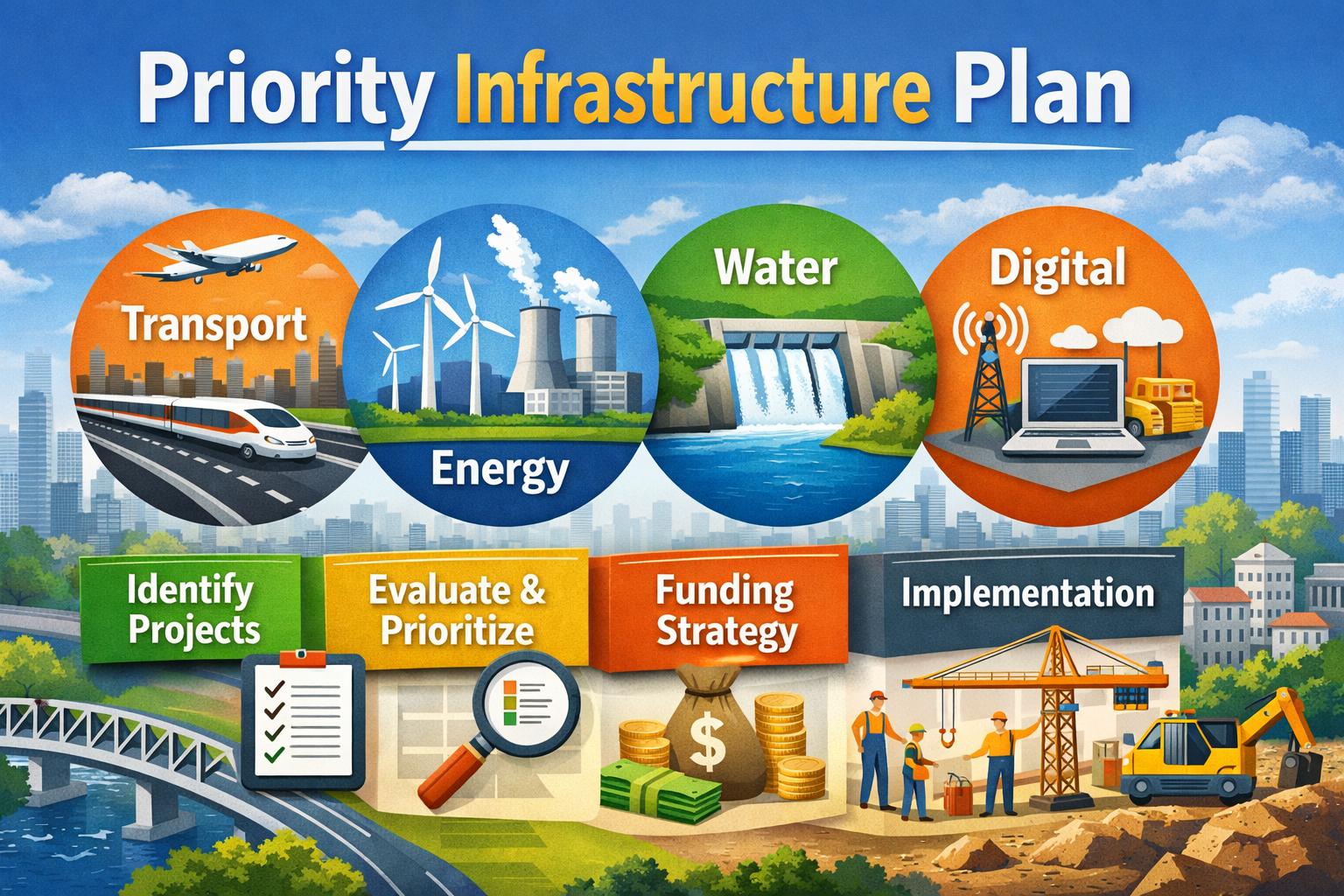
Priority Infrastructure Plan: Simple Guide for Beginners
A priority infrastructure plan is a clear plan that helps decide which infrastructure projects should be done first. It is used by governments and organizations to make smart decisions about roads, water systems, electricity, and other important services.
Instead of building everything at once, this plan helps choose the most important projects based on need, cost, and impact.
What is Infrastructure?
Infrastructure means the basic systems that help a country or city work properly.
Examples of infrastructure:
-
Roads and highways
-
Railways and transport systems
-
Water supply and drainage
-
Electricity and energy systems
-
Internet and communication networks
-
Schools and hospitals
These systems support daily life and economic activities.
What is a Priority Infrastructure Plan?
A priority infrastructure plan is a step-by-step method to:
-
Identify important projects
-
Rank them based on importance
-
Decide which ones to build first
-
Plan how to pay for them
-
Manage and complete them
It helps avoid waste of time and money.
Why is it Important?
A priority infrastructure plan is important because resources are limited. We cannot build everything at the same time.
Main benefits:
-
Better use of money
-
Faster development
-
Improved public services
-
Reduced delays and confusion
-
Long-term planning
Key Goals of the Plan
| Goal | Explanation |
|---|---|
| Economic Growth | Improve business and create jobs |
| Better Living | Provide clean water, transport, and services |
| Sustainability | Protect environment and use resources wisely |
| Fair Development | Support both urban and rural areas |
Main Steps in a Priority Infrastructure Plan
1. Identify Needs
First, planners study what is missing or needed.
Examples:
-
Traffic problems
-
Water shortages
-
Power supply issues
2. List Possible Projects
All possible projects are listed.
Examples:
-
New highway
-
Water treatment plant
-
Solar power system
3. Evaluate Projects
Each project is checked carefully using:
-
Cost
-
Benefits
-
Feasibility
-
Risks
4. Rank Projects
Projects are ranked from most important to least important.
5. Plan Budget and Funding
Decide how to pay for the projects:
-
Government funds
-
Private investment
-
Loans or partnerships
6. Implementation
Start and complete the projects step by step.
Common Sectors Covered
Most plans include these areas:
| Sector | Examples |
|---|---|
| Transport | Roads, bridges, railways |
| Water | Supply systems, drainage |
| Energy | Electricity, renewable energy |
| Digital | Internet, telecom |
| Public Services | Schools, hospitals |
Different Types of Priority Infrastructure Plans
1. Urban Planning Plans
-
Focus on cities
-
Linked with population growth
-
Plan for next 10–15 years
2. Government Policy Plans
-
Large-scale national plans
-
Include laws and regulations
-
Long-term vision
3. Economic Focus Plans
-
Focus on business and investment
-
Aim to increase productivity
-
Measure financial returns
4. Project Pipeline Plans
-
Focus on execution
-
Include timelines and budgets
-
Usually 5-year plans
Challenges in Making the Plan
Even though the plan is useful, there are some problems:
Common challenges:
-
Lack of accurate data
-
Political influence
-
Limited budget
-
Delays in execution
-
Poor coordination
How to Improve the Plan
Better methods include:
-
Using modern technology (data tools, software)
-
Involving experts and local communities
-
Clear rules and transparency
-
Regular updates to the plan
-
Focus on environment and climate
Simple Comparison Table
| Aspect | Basic Plans | Advanced Plans |
|---|---|---|
| Detail Level | Simple explanation | Detailed analysis |
| Data Use | Limited | Data-driven |
| Time Period | Short-term | Long-term |
| Focus | General needs | Strategy and impact |
| Execution | Basic | Structured and monitored |
Future of Infrastructure Planning
In the future, priority infrastructure plans will become more advanced.
Future trends:
-
More use of clean energy
-
Smart cities and digital systems
-
Climate-friendly projects
-
Better planning tools
Conclusion
A priority infrastructure plan is a smart way to plan development. It helps choose the most important projects and use resources wisely.
By following clear steps, using data, and focusing on real needs, such plans can:
-
Improve daily life
-
Support economic growth
-
Build a better future
It is an essential tool for any country or city that wants to grow in a planned and efficient way.