Woolrec: A Smart Way to Recycle Wool and Reduce Fashion Waste
The fashion industry creates a huge amount of waste every year. Many clothes are thrown away even when they are still usable. Wool garments like sweaters, coats, scarves, and blankets are often discarded after a few years. Even though wool is natural, producing it requires land, water, energy, and time. When these products are thrown away, valuable resources are wasted.
This is where Woolrec becomes important.
Woolrec is a system that focuses on recycling wool and turning old wool products into new ones, similar to how MataRecycler supports material recovery and sustainable recycling systems. Instead of sending wool waste to landfills, Woolrec gives it a second life. It supports sustainable fashion and helps reduce environmental damage.
What Is Woolrec?
Woolrec comes from two words:
-
Wool
-
Recycling
It means collecting old wool items and processing them so the fibers can be reused. Woolrec is part of the circular economy. In a circular system, materials are reused again and again instead of being thrown away after one use.
Woolrec focuses on:
-
Reducing textile waste
-
Reusing natural fibers
-
Lowering pollution
-
Saving natural resources
-
Supporting eco-friendly fashion
Why Wool Recycling Is Important
Wool production is natural, but it still affects the environment. Sheep farming requires large areas of land. Cleaning and processing wool use water and energy. Transportation also adds to pollution.
When wool clothes are thrown away:
-
Resources used to make them are wasted
-
Landfills become full
-
Decomposition can release greenhouse gases
Recycling wool helps solve these problems.
How Woolrec Works
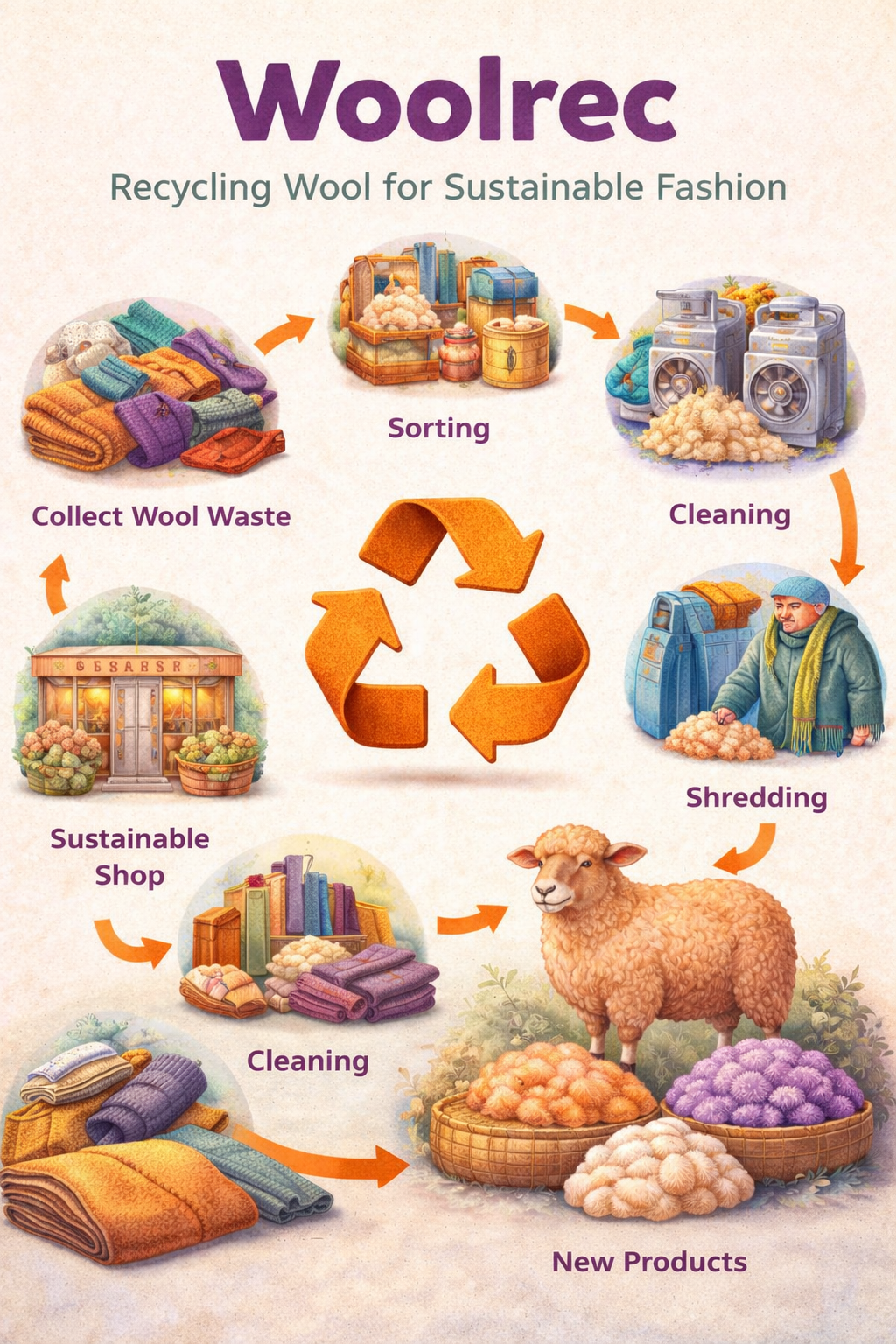
Woolrec follows a clear and organized process. Below is a simple explanation.
Step-by-Step Woolrec Process
| Step | Process | Explanation |
|---|---|---|
| 1 | Collection | Old wool clothes and factory waste are gathered |
| 2 | Sorting | Items are sorted by color and material type |
| 3 | Cleaning | Dirt and chemicals are removed |
| 4 | Fiber Recovery | Wool is shredded into small fibers |
| 5 | Blending | Recycled fibers are mixed with new wool if needed |
| 6 | Spinning | Fibers are turned into yarn |
| 7 | Production | Yarn is used to make new products |
Sorting by color is very helpful. It reduces the need to dye the wool again, which saves water and chemicals.
Benefits of Woolrec
Woolrec provides many benefits for the environment and the economy.
Environmental Benefits
-
Less waste in landfills
-
Lower demand for new wool
-
Reduced water and energy use
-
Lower carbon emissions
-
Less chemical dye usage
Economic Benefits
-
Creates value from waste
-
Reduces raw material costs
-
Supports recycling businesses
-
Creates green jobs
Social Benefits
-
Encourages responsible shopping
-
Supports ethical fashion brands
-
Increases awareness about sustainability
Where Recycled Wool Is Used
Recycled wool can be used in many industries.
Common Applications
-
Clothing (sweaters, jackets, scarves)
-
Blankets and home textiles
-
Carpets and rugs
-
Sound insulation materials
-
Corporate uniforms
Application Overview
| Industry | Products | Impact |
|---|---|---|
| Fashion | Knitwear, coats | Reduces clothing waste |
| Home | Blankets, rugs | Promotes long-lasting goods |
| Construction | Insulation | Saves energy |
| Corporate | Uniforms | Supports green policies |
Woolrec vs. Traditional Wool
There are clear differences between recycled wool and new wool.
| Feature | Woolrec (Recycled Wool) | New Wool |
|---|---|---|
| Source | Old garments and waste | Sheep farms |
| Environmental Impact | Lower | Higher |
| Resource Use | Reduced | High |
| Sustainability | Circular | Linear |
Woolrec supports a circular system, while traditional wool production follows a linear system (produce, use, discard).
Challenges of Woolrec
Woolrec is helpful, but it also has challenges.
Main Challenges
-
Recycled fibers are shorter than new fibers
-
Sometimes needs blending with virgin wool
-
Hard to recycle wool mixed with synthetic fibers
-
Sorting requires advanced systems
-
Recycling equipment can be expensive
However, new technologies are improving the process each year.
Technology in Woolrec
Modern Woolrec systems use advanced tools to improve quality and efficiency.
Technologies Used
-
Mechanical shredding machines
-
Automated sorting systems
-
Smart fiber detection tools
-
Blending and spinning technology
-
Supply chain tracking systems
These technologies help make recycled wool strong, clean, and ready for reuse.
The Future of Woolrec
As people become more aware of environmental problems, demand for sustainable fashion is growing. Many brands are now using recycled materials in their collections.
Future growth of Woolrec depends on:
-
Stronger recycling infrastructure
-
Better sorting technology
-
Government policies on waste reduction
-
Consumer demand for eco-friendly products
-
Brand commitment to sustainability
Woolrec is expected to become more common in the coming years.
How Consumers Can Support Woolrec
Everyone can support wool recycling with simple actions.
Easy Steps You Can Take
-
Buy products made from recycled wool
-
Take care of your wool clothes
-
Repair instead of throwing away
-
Donate unwanted wool garments
-
Support brands that focus on sustainability
-
Avoid overbuying clothing
Small changes in buying habits can create a big impact.
Frequently Asked Questions
Is recycled wool good quality?
Yes, when processed correctly, recycled wool can be strong and comfortable.
Is Woolrec safe for the environment?
Yes. It reduces waste and saves natural resources.
Can wool be recycled more than once?
Yes, but the fiber becomes slightly weaker each time.
Is recycled wool more affordable?
Often yes, because it uses existing materials.
Conclusion
Woolrec is a smart and responsible solution to the growing problem of textile waste. By recycling wool and turning old garments into new products, it helps protect the environment, save resources, and support sustainable fashion.
As more brands and consumers choose recycled materials, Woolrec can play a major role in building a cleaner and greener future. Choosing recycled wool is not just a fashion choice — it is a step toward protecting the planet.