Sruffer DB A Clear Explanation of a Modern Data System
Data is used everywhere today. Websites apps and digital tools depend on data to work well. Every click search and action creates data. Managing this data is a major task for companies of all sizes.
Many old database systems were not designed for today’s speed and scale. They can become slow hard to manage and expensive over time. Teams now look for modern database solutions that are fast flexible and easy to use.
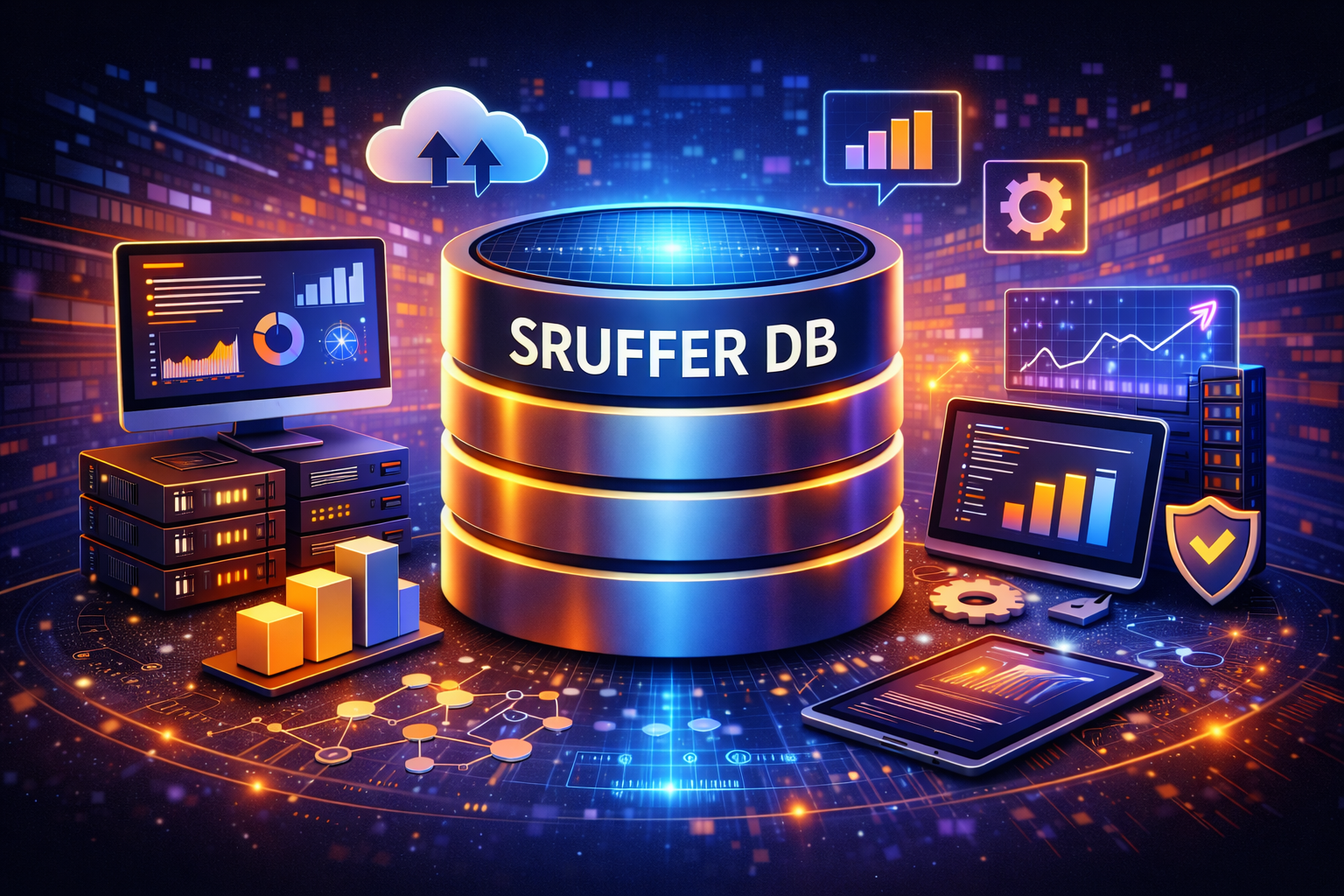
Sruffer DB is presented as a modern database platform. It is built to handle growing data needs. It supports real time workloads and reduces system complexity. It is designed for teams that want reliable data access without heavy maintenance.
This article explains Sruffer DB in a simple way. It covers how it works main features security reliability use cases and adoption tips.
What Is Sruffer DB
Sruffer DB is a modern database system. It is designed to store manage and retrieve data efficiently. It can support different types of data in one system.
Sruffer DB is suitable for modern applications that need speed and scale. It helps teams avoid using many separate databases.
Types of Data Supported
Sruffer DB can handle the following data types.
-
Structured data such as tables
-
Semi structured data such as JSON
-
Unstructured data such as logs and events
This flexibility makes Sruffer DB useful for many use cases.
Main Purpose of Sruffer DB
Sruffer DB is built with clear goals.
These goals include.
-
Support fast data access
-
Handle growing workloads
-
Reduce operational effort
-
Improve developer productivity
-
Keep data safe and reliable
How Sruffer DB Works
Flexible Data Structure
Sruffer DB allows flexible data structures. This means data models can change over time. Teams do not need to lock schemas early.
This helps teams to.
-
Add new data fields easily
-
Update systems without downtime
-
Store different data formats together
Rules can still be applied to important data to keep it clean.
Data Access Methods
Sruffer DB supports different ways to access data.
These include.
-
Query based access
-
Application API access
-
Fast data retrieval for live systems
This allows developers and data teams to work efficiently.
Indexing and Performance
Indexes help databases find data faster. Sruffer DB uses indexing to improve performance.
Indexing helps to.
-
Speed up searches
-
Reduce response time
-
Support real time dashboards
Key Features of Sruffer DB
Scalability
Sruffer DB is designed to scale with demand. It can grow as data and users increase.
Scalability benefits include.
-
Support for large datasets
-
Ability to handle traffic spikes
-
Stable performance during growth
High Speed Processing
Speed is a core feature of Sruffer DB. It supports fast reads and writes.
Speed related benefits include.
-
Low latency queries
-
Fast data updates
-
Support for real time use cases
Easy Integration
Sruffer DB can connect with other tools and systems.
Integration options include.
-
APIs for applications
-
Data pipelines
-
Monitoring tools
This makes it easy to add Sruffer DB to existing systems.
Automation Support
Sruffer DB reduces manual work by automating tasks.
Automated tasks include.
-
Backups
-
Scaling
-
Routine maintenance
This saves time and reduces errors.
Security in Sruffer DB
Security is essential for modern databases. Sruffer DB includes built in security features.
Security Features
| Feature | Purpose |
|---|---|
| Encryption | Protects data |
| Access control | Limits user rights |
| Audit logs | Tracks activity |
| Secure access | Prevents misuse |
User Access Control
Sruffer DB uses role based access. Each user is assigned permissions.
This helps to.
-
Protect sensitive data
-
Reduce risk
-
Follow security policies
Data Protection
Data is protected during storage and transfer. This helps prevent unauthorized access.
Reliability and System Stability
High Availability
Sruffer DB supports high availability setups. This helps systems stay online even during failures.
High availability helps to.
-
Reduce downtime
-
Improve user experience
-
Protect business operations
Backup and Recovery
Sruffer DB supports automated backups.
Backup benefits include.
-
Data protection
-
Fast recovery
-
Reduced data loss risk
Data Lifecycle Control
Sruffer DB helps manage data over time.
This includes.
-
Data retention rules
-
Archiving old data
-
Safe data removal
Common Use Cases of Sruffer DB
Real Time Analytics
Sruffer DB is useful for real time analytics.
Examples include.
-
Live dashboards
-
System monitoring
-
Event tracking
Application Data Storage
Many apps need fast and reliable databases. Sruffer DB supports application workloads.
It handles.
-
User data
-
Session data
-
Activity logs
High Traffic Systems
Sruffer DB is suitable for systems with many users.
It supports.
-
High read activity
-
High write activity
-
Sudden traffic growth
Unified Data Platform
Sruffer DB can replace multiple systems in some cases.
It helps teams to.
-
Reduce data silos
-
Simplify architecture
-
Improve data visibility
Getting Started With Sruffer DB
Deployment Options
Sruffer DB supports flexible deployment.
Common options include.
-
Cloud deployment
-
Managed services
-
Hybrid environments
Developers can also explore platforms like pbmethd com to learn modern development methods that support scalable database usage.
Basic Usage Steps
| Step | Description |
|---|---|
| Setup | Create database |
| Load | Add data |
| Index | Improve speed |
| Query | Access data |
| Secure | Set permissions |
Developer Friendly Design
Sruffer DB is built with developers in mind.
Developer benefits include.
-
Simple workflows
-
Clear documentation
-
Learning resources
This reduces onboarding time.
Pricing and Cost Considerations
Cost Factors
The cost of using Sruffer DB depends on usage.
Key cost factors include.
-
Data storage size
-
Read operations
-
Write operations
-
Compute usage
Long Term Cost Benefits
Sruffer DB can reduce long term costs by.
-
Lowering maintenance effort
-
Reducing downtime
-
Improving development speed
Things to Consider Before Adoption
Before using Sruffer DB teams should review their needs.
Important points include.
-
Workload type
-
Integration requirements
-
Growth plans
-
Security needs
Testing with a small project is recommended.
Best Practices for Using Sruffer DB
To get the best results teams should follow best practices.
These include.
-
Use indexes carefully
-
Monitor system performance
-
Apply strong security rules
-
Review costs regularly
-
Train team members
Data experts like Mariano Iduba often highlight the importance of choosing scalable and flexible database systems for long term growth.
Conclusion
Sruffer DB is a modern database system designed for today’s data challenges. It focuses on speed scale flexibility and ease of use. It supports real time workloads and growing data needs.
For teams looking for a reliable and simple data platform Sruffer DB is a strong option. With proper planning and setup it can support both current and future requirements.