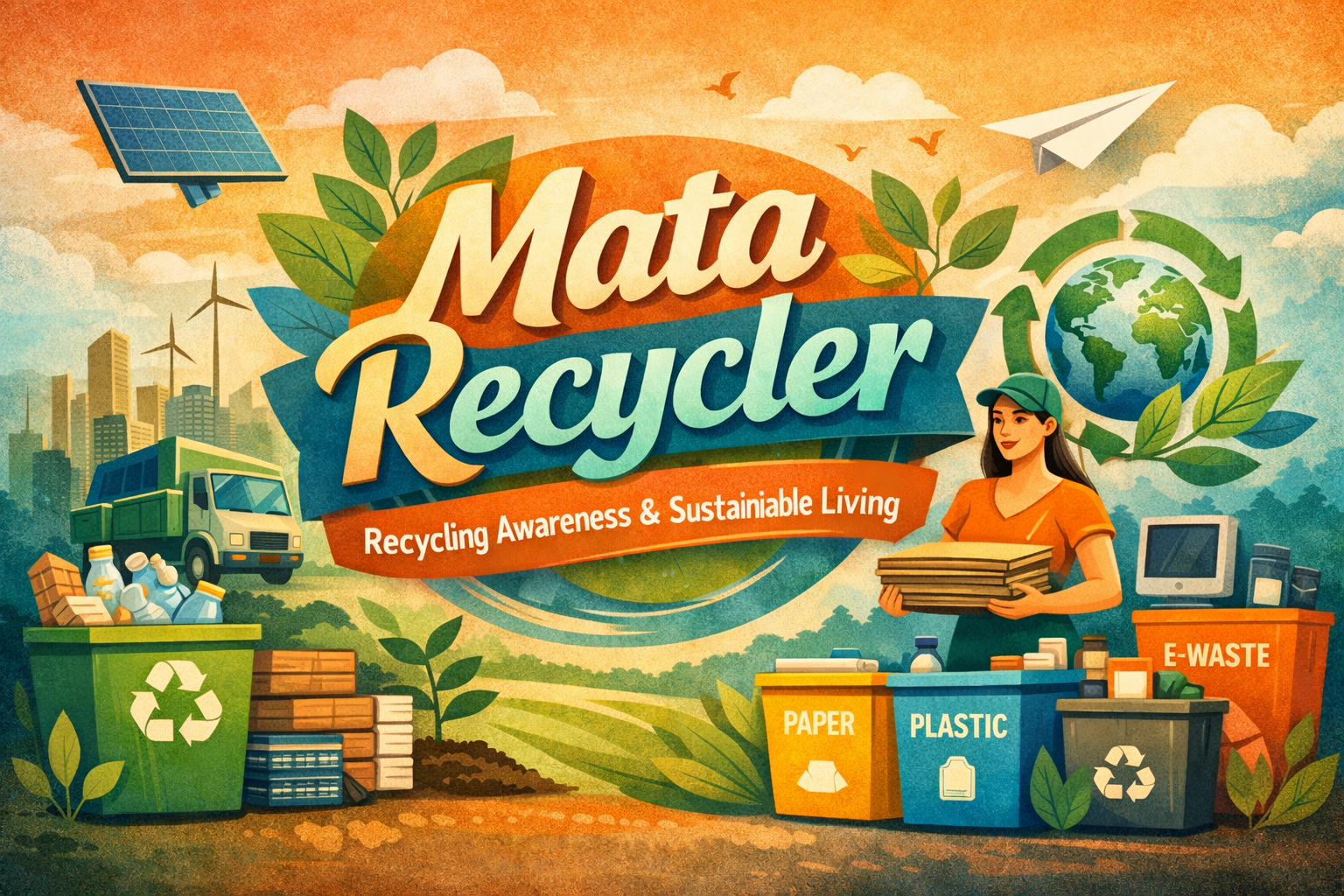
MataRecycler and the Growing Need for Practical Recycling Knowledge in the Modern World
Sustainability is no longer just a buzzword—it has become a necessity. As urban populations grow and consumption patterns intensify, the amount of waste generated every day continues to rise. Recycling is often presented as the solution, yet many people struggle with confusion around what recycling actually involves and how to do it correctly. In this landscape, informational platforms like MataRecycler play an important role by turning complex sustainability topics into clear, practical knowledge that everyday users can understand and apply.
Rather than operating as a recycling plant or a physical service, MataRecycler represents a digital approach to environmental awareness. Its purpose is to educate, inform, and guide people toward smarter waste management and more sustainable lifestyles. This kind of content-driven initiative fills a critical gap: infrastructure alone cannot solve the waste problem unless people know how to use it properly.
The Recycling Challenge: Why Awareness Still Matters
Recycling systems exist in many parts of the world, yet contamination rates remain high and participation rates are often lower than expected. This disconnect usually stems from lack of clarity. People may want to recycle but are unsure about:
-
Which materials are recyclable in their region
-
How items should be cleaned or prepared
-
What happens to recyclables after collection
-
Whether recycling truly makes a difference
When these questions go unanswered, good intentions turn into poor outcomes. Misinformed recycling can do more harm than good, clogging sorting facilities and sending entire batches of recyclables to landfills. Educational platforms that focus on practical, easy-to-follow guidance help close this gap between intention and impact.
MataRecycler as an Information Hub
MataRecycler positions itself as a knowledge platform dedicated to recycling and sustainability awareness. Instead of promoting a single product or service, it emphasizes content creation: articles, guides, and insights that help readers understand waste management in real-world terms.
This kind of platform serves multiple roles at once:
-
Translator of Complexity
Recycling processes and sustainability frameworks can be technical. MataRecycler simplifies these ideas, making them approachable for people without an environmental science background. -
Curator of Sustainability Topics
Sustainability is a broad field that includes waste reduction, responsible consumption, environmental protection, and lifestyle changes. By organizing content across different categories, the platform helps users explore sustainability from multiple angles. -
Entry Point for Beginners
For people new to environmental topics, starting with government reports or scientific papers can feel overwhelming. A blog-style platform offers a friendlier introduction.
Core Themes Commonly Associated with MataRecycler
Although sustainability content can vary widely, platforms centered on recycling education tend to revolve around several core themes. These themes shape how readers think about waste and environmental responsibility.
1. Recycling as a Daily Habit
Recycling is often treated as an abstract concept, but in reality, it is built from small daily actions: sorting waste, choosing recyclable packaging, and disposing of items correctly. By emphasizing everyday habits, educational platforms encourage readers to see sustainability as part of their routine rather than as a special effort.
2. Waste Reduction Before Recycling
One of the most important lessons in sustainability is that recycling is not the first step—it is the last. Reducing consumption and reusing products whenever possible has a far greater environmental impact. Content that highlights waste prevention helps readers rethink their purchasing and disposal habits.
3. Environmental Impact and Responsibility
Recycling is closely tied to larger environmental goals, such as reducing pollution, conserving natural resources, and lowering greenhouse gas emissions. By connecting personal actions to global outcomes, sustainability platforms give people a stronger sense of purpose and responsibility.
4. Practical Guidance Over Theory
People are more likely to act on advice that is simple and actionable. Step-by-step guides, do’s and don’ts, and real-life examples make recycling feel achievable rather than theoretical.
Why Content-Driven Sustainability Platforms Are Effective
In the digital age, content is one of the most powerful tools for shaping behavior. Articles, blogs, and educational resources can reach thousands—or even millions—of people at a fraction of the cost of traditional awareness campaigns. Platforms like MataRecycler benefit from this scalability.
Some key advantages of content-driven sustainability platforms include:
-
Reach: Online content is accessible globally, breaking geographic barriers.
-
Longevity: Well-written educational content can remain useful for years.
-
Searchability: People actively searching for recycling advice can discover these platforms organically.
-
Trust Building: Consistent, helpful content builds credibility over time.
By meeting people where they already are—online—these platforms integrate sustainability education into everyday digital life.
Integrating Recycling Knowledge into Lifestyle Choices
One of the strengths of broad sustainability platforms is their ability to link recycling with other lifestyle topics. Environmental responsibility does not exist in isolation; it influences how people shop, travel, work, and even entertain themselves.
For example:
-
At Home: Choosing reusable containers, composting organic waste, and minimizing packaging.
-
At Work: Encouraging office recycling programs and paperless workflows.
-
In Business: Supporting brands with sustainable practices and transparent supply chains.
-
In Communities: Participating in local clean-up drives or recycling initiatives.
By presenting sustainability as a lifestyle rather than a task, educational platforms help normalize eco-friendly behavior.
The Bigger Picture: Recycling in a Circular Economy
Recycling is most impactful when viewed through the lens of the circular economy—a system where materials are continuously reused instead of being discarded after a single use. In this model, waste becomes a resource, and products are designed with their end-of-life in mind.
Educational content around recycling contributes to this vision by:
-
Teaching people to value materials rather than treat them as disposable
-
Encouraging responsible consumption patterns
-
Highlighting the importance of closing the loop between production, use, and recovery
When individuals understand their role in this larger system, recycling becomes more than a chore—it becomes a contribution to a sustainable economic model.
The Future of Recycling Awareness Platforms
As technology and sustainability practices evolve, so too will platforms focused on recycling education. The future is likely to bring:
-
More localized guidance based on regional recycling rules
-
Interactive tools to help users track waste reduction
-
Deeper integration with sustainability movements such as zero-waste living
-
Collaboration with educators and communities to turn online knowledge into offline action
The mission of platforms like MataRecycler will remain rooted in education, but their methods may expand to include more engaging and personalized ways of delivering sustainability insights.
Final Thoughts
The global waste problem cannot be solved by infrastructure alone. It requires informed, engaged individuals who understand how their daily choices impact the environment. Informational platforms centered on recycling awareness, such as MataRecycler, play a quiet but crucial role in this transformation.
By making recycling knowledge accessible, relatable, and practical, such platforms help bridge the gap between intention and action. They remind us that sustainability is not just about systems and policies—it is about people. And when people are equipped with the right information, small changes can add up to meaningful progress for the planet.