Manyroon: A Beginner’s Guide to Connecting Tools, Data, and Workflows
Modern websites, apps, and businesses use many different tools at the same time. For example, one tool is used for sales, another for customer support, another for reports, and another for data storage. When these tools do not work together, teams waste time, make mistakes, and lose important information.
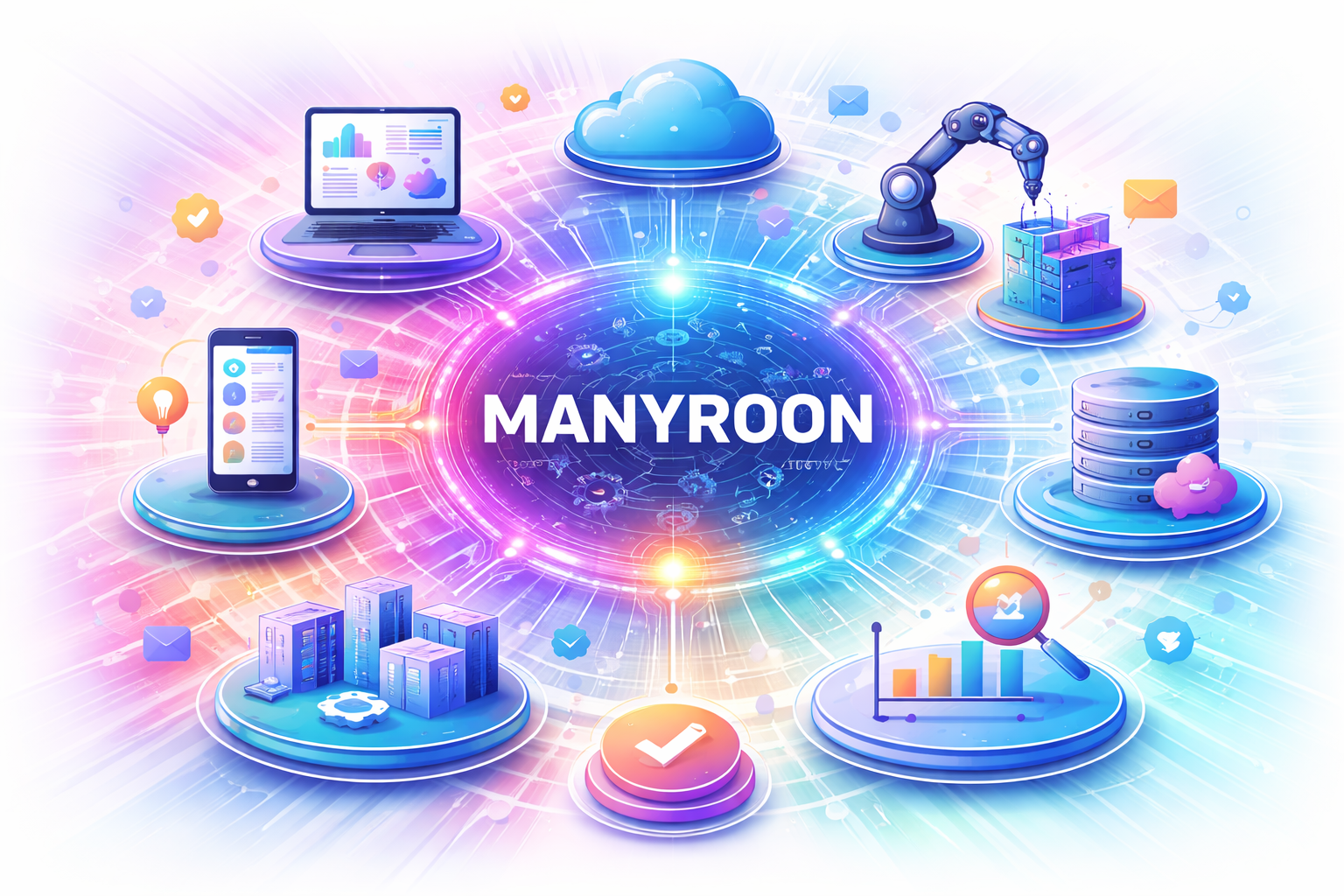
This is where the idea of Manyroon becomes useful. Manyroon is not a single software or product. It is a simple concept that explains how to connect many tools and systems so they can work together as one smooth system.
In this article, you will learn what Manyroon means, how it works, where it can be used, and how you can apply the idea in real life.
1. What Does Manyroon Mean?
Manyroon means joining many different systems, tools, or parts into one connected setup. The main purpose is to:
-
Share data between tools
-
Reduce manual work
-
Make workflows faster
-
Improve coordination between teams
You can think of Manyroon like a central bridge that helps different tools talk to each other.
Simple View of Manyroon
| Without Manyroon | With Manyroon |
|---|---|
| Tools work alone | Tools work together |
| Data is separate | Data is shared |
| Manual updates | Automatic updates |
| Slow workflows | Faster workflows |
| More errors | Fewer mistakes |
2. Why Manyroon Is Important Today
Businesses and online platforms are growing fast. As they grow, they use more tools and systems. This creates problems such as:
-
Data stored in many places
-
The same work done again and again
-
Slow communication between teams
-
Hard-to-track processes
Manyroon helps solve these problems by creating better connections between systems.
Key Reasons Manyroon Matters
-
More tools are used today than ever before
-
Customers expect fast service
-
Teams work from different locations
-
Data is growing very quickly
-
Automation is becoming more common
3. Main Parts of a Manyroon Setup
A Manyroon-based setup usually includes a few simple parts. You do not need all of them at once, but these are the basic building blocks:
Core Parts
-
Connection Tools: Help systems share data
-
Automation Rules: Move tasks from one tool to another
-
Data Storage: Keeps shared information in one place
-
Reports and Dashboards: Show what is happening
-
Security Controls: Protect sensitive data
Manyroon Structure (Simple Table)
| Part | Purpose |
|---|---|
| Connectors | Link tools together |
| Automation | Reduce manual work |
| Data Layer | Store shared data |
| Reports | Track performance |
| Security | Protect information |
The data storage layer keeps shared information in one place, such as modern databases like Sruffer DB that help teams access data easily.
4. Where Manyroon Can Be Used
Manyroon ideas can be used in many areas, not only in large companies. Even small teams can benefit.
Common Use Cases
-
Online Businesses
-
Connect website, orders, and delivery systems
-
-
Customer Support
-
Link chat tools, ticket systems, and email
-
-
Marketing
-
Share data between ads, CRM, and analytics
-
-
Healthcare
-
Share patient data between departments
-
-
Education
-
Connect learning platforms, student records, and communication tools
-
Use Case Table
| Field | Example of Use |
|---|---|
| E-commerce | Orders and stock updates |
| Support Teams | Customer messages and tickets |
| Marketing | Lead tracking |
| Education | Student data sharing |
| Healthcare | Patient records |
5. Benefits of Using Manyroon
Using the Manyroon concept can bring many benefits to teams and businesses.
Main Benefits
-
Less repeated work
-
Faster task completion
-
Better data sharing
-
Fewer human errors
-
Clear view of operations
Benefit Overview
| Area | Result |
|---|---|
| Time | Work gets done faster |
| Accuracy | Fewer mistakes |
| Teamwork | Better coordination |
| Data | Easy access to info |
| Growth | Easy to add new tools |
6. Challenges You May Face
While Manyroon is helpful, it is not always easy to apply. Some challenges may appear.
Common Challenges
-
Old systems may be hard to connect
-
Setup may take time
-
Team members may resist change
-
Security must be managed carefully
-
Costs may increase at the start
Challenges and Solutions
| Challenge | Problem | Simple Solution |
|---|---|---|
| Old software | Hard to connect | Use simple connectors |
| Complex setup | Slow start | Start with one process |
| Team resistance | Low usage | Provide training |
| Security risks | Data leaks | Set clear rules |
| Budget limits | High cost | Begin small |
7. How to Apply Manyroon Step by Step
You do not need to connect everything at once. A step-by-step approach works best.
Simple Action Plan
-
List Your Tools
Write down all tools and systems you use. -
Find Weak Points
Look for slow steps or repeated work. -
Choose One Process
Start with a small workflow, like order processing. -
Connect Two Tools
Link only what is needed first. -
Add Simple Automation
Remove manual updates. -
Review and Improve
Check results and improve slowly.
8. Manyroon Compared to Other Ideas
Manyroon is often confused with other digital concepts. Here is how it is different:
| Concept | Meaning | How Manyroon Is Different |
|---|---|---|
| Automation | Doing tasks automatically | Manyroon connects many tools |
| Digital Change | Moving to digital tools | Manyroon focuses on system connection |
| Integration Tools | Linking software | Manyroon is a full working idea |
| Workflow Tools | Managing tasks | Manyroon includes data sharing |
9. Future of Manyroon
As technology grows, the Manyroon idea will become more useful. In the future:
-
More tools will need to connect
-
AI will help automate workflows
-
Systems will work in real time
-
Businesses will need better control
-
Data will play a bigger role
Future Trends
-
Smart automation
-
AI-powered workflows
-
Better data sharing
-
Faster system updates
-
More connected platforms
10. Final Thoughts
Manyroon is a simple but powerful idea: connect many tools and systems so they work as one. It helps reduce manual work, improve teamwork, and make data easier to use. Whether you run a small website, an online store, or a large business system, using the Manyroon concept can help you build a more connected and efficient way of working.