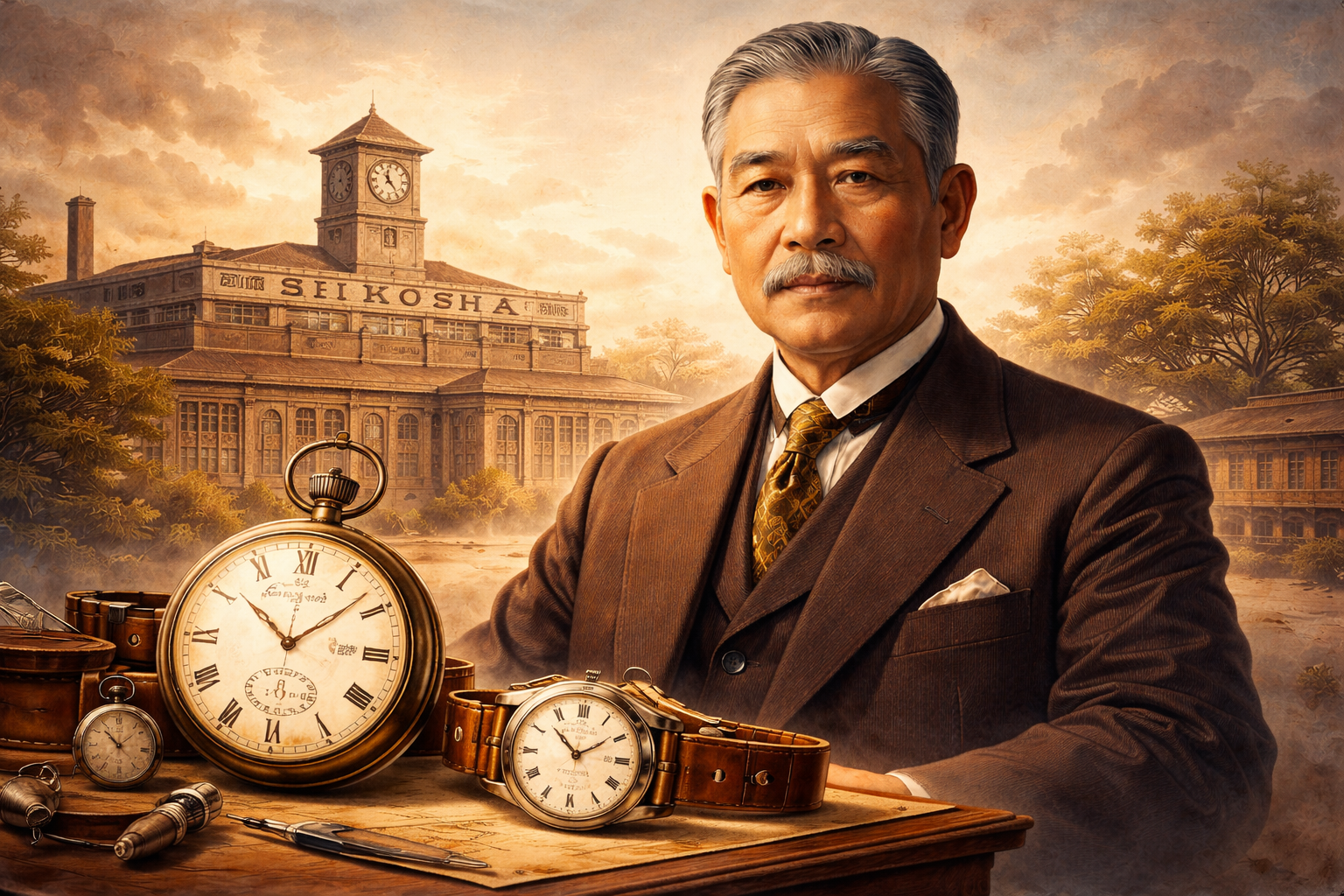
Kintaro Hattori: The Entrepreneur Who Changed Japanese Watchmaking Forever
Kintaro Hattori was not just a businessman. He was a visionary who helped build Japan’s modern watch industry from the ground up. As the founder of Seiko, he played a key role in turning Japan into a country known for precision, innovation, and high-quality timepieces. His journey from a small repair shop owner to the leader of a major manufacturing company is a powerful story of determination, smart planning, and long-term thinking.
This article explores his life, achievements, leadership style, and the lasting impact he left on the world of watchmaking.
The Early Years of Kintaro Hattori
Kintaro Hattori was born in 1860 in Tokyo, during a time when Japan was changing rapidly. The country was opening its doors to Western technology and ideas after many years of isolation. Mechanical clocks and watches were becoming popular, but most of them were imported from Europe or America.
As a young boy, Hattori became interested in mechanical devices. He later worked as an apprentice in the clock and watch trade. During this time, he learned:
-
How to repair timepieces
-
How imported watches were sold
-
The value of precision and accuracy
-
The growing demand for reliable clocks
This early experience gave him both technical knowledge and business understanding.
Opening a Small Watch Shop in Ginza
In 1881, at the age of 21, Hattori opened his own shop in the Ginza district of Tokyo. At first, he focused on selling and repairing imported watches and clocks. His shop quickly gained a good reputation because he provided quality service and fair prices.
Why was this important?
-
It allowed him to understand customer needs
-
It helped him build trust in the community
-
It gave him income to invest in bigger plans
-
It taught him how the watch market worked
While many people were satisfied with selling foreign goods, Hattori had a bigger goal. He wanted Japan to produce its own watches.
Creating Seikosha: A Major Turning Point
In 1892, Hattori founded a factory called Seikosha, which means “House of Precision.” This was a bold move because Japan did not yet have a strong watch manufacturing industry.
His decision to build a factory showed his forward-thinking mindset.
Main Goals of Seikosha
-
Manufacture clocks in Japan
-
Improve technical skills among workers
-
Control product quality
-
Reduce dependence on imported watches
The factory started by making wall clocks. Over time, the quality improved, and Seikosha gained a strong reputation.
The First Japanese Wristwatch
One of Hattori’s most important achievements came in 1913. Seikosha produced the Laurel, which is known as Japan’s first wristwatch.
At that time, wristwatches were still new and not widely used. Producing one in Japan was a major step forward.
This achievement showed:
-
Japan could compete with Western watchmakers
-
Local workers had gained strong technical skills
-
The company was ready for greater innovation
The Laurel helped establish Japan as a serious player in watchmaking.
The Birth of the Seiko Brand
In 1924, the company began using the name Seiko on its watches. The word “Seiko” is associated with precision and success. This branding decision was important because it created a clear and strong identity for the company.
Instead of selling products under different names, Hattori focused on building one trusted brand.
This strategy helped:
-
Strengthen customer recognition
-
Build long-term brand loyalty
-
Prepare the company for global expansion
The Seiko name later became known worldwide for quality and innovation.
Overcoming the Great Kanto Earthquake
In 1923, disaster struck. The Great Kanto Earthquake destroyed much of Tokyo, including Hattori’s factories and offices. The damage was severe, and production stopped.
Many companies would have closed permanently after such a loss. But Hattori chose to rebuild.
His Response to the Crisis
-
Reconstructed factory buildings
-
Restarted production step by step
-
Maintained confidence in the brand
-
Focused on long-term recovery
This period proved his strength as a leader. His ability to stay calm and act with purpose helped the company survive and grow even stronger.
His Leadership Philosophy
Kintaro Hattori followed a simple but powerful belief:
“Always one step ahead of the rest.”
This idea guided every major decision he made.
What This Philosophy Meant in Practice
-
Constant improvement of products
-
Investment in modern machinery
-
Focus on skilled labor
-
Willingness to adapt to change
He believed that businesses must continue moving forward. Standing still meant falling behind.
His Impact on Japanese Industry
Hattori’s influence went beyond watches. He helped shape Japan’s modern manufacturing culture.
His work contributed to:
-
Growth of domestic industry
-
Development of technical education
-
Stronger national confidence in production
-
Creation of skilled jobs
By proving that Japan could manufacture high-quality timepieces, he helped raise the country’s global reputation.
Personal Traits That Led to Success
Several personal qualities helped Kintaro Hattori achieve long-term success:
-
Vision: He thought about the future, not just the present.
-
Patience: He understood that building industry takes time.
-
Courage: He took risks by starting a factory.
-
Resilience: He rebuilt after natural disaster.
-
Commitment to Quality: He never compromised on standards.
These traits made him more than a businessman — they made him a true industrial leader.
His Final Years and Passing
Kintaro Hattori passed away in 1934. By that time, he had already built a strong foundation for what would become one of the most respected watch companies in the world.
Even though he did not live to see many of Seiko’s later innovations, his systems and values made them possible.
The Lasting Legacy of Kintaro Hattori
Today, Seiko is recognized worldwide for precision and innovation. The company has introduced many technological breakthroughs over the years. All of these advancements trace back to the groundwork laid by Hattori.
His legacy can be seen in:
-
Strong manufacturing systems
-
Focus on innovation
-
Global brand recognition
-
Commitment to accuracy and quality
More than a century after he opened his small shop in Ginza, his influence continues.
Why Kintaro Hattori’s Story Still Matters
In today’s fast-changing world, entrepreneurs can still learn from Hattori’s approach.
Key Lessons for Modern Business Owners
-
Start small but plan big
-
Invest in skills and training
-
Focus on quality over quick profit
-
Stay strong during difficult times
-
Build a brand people trust
His life shows that success is not built overnight. It requires vision, discipline, and the courage to move forward even when the path is uncertain.
Conclusion
Kintaro Hattori changed the course of Japanese watchmaking through hard work, clear vision, and strong leadership. From a small repair shop in Tokyo, he built a company that helped define Japan’s industrial future. His story is not just about watches — it is about building something meaningful that lasts beyond one lifetime.
Because of his efforts, Japan became known for precision and quality in timekeeping. And today, the name Seiko continues to represent the values he believed in: innovation, reliability, and always staying one step ahead.