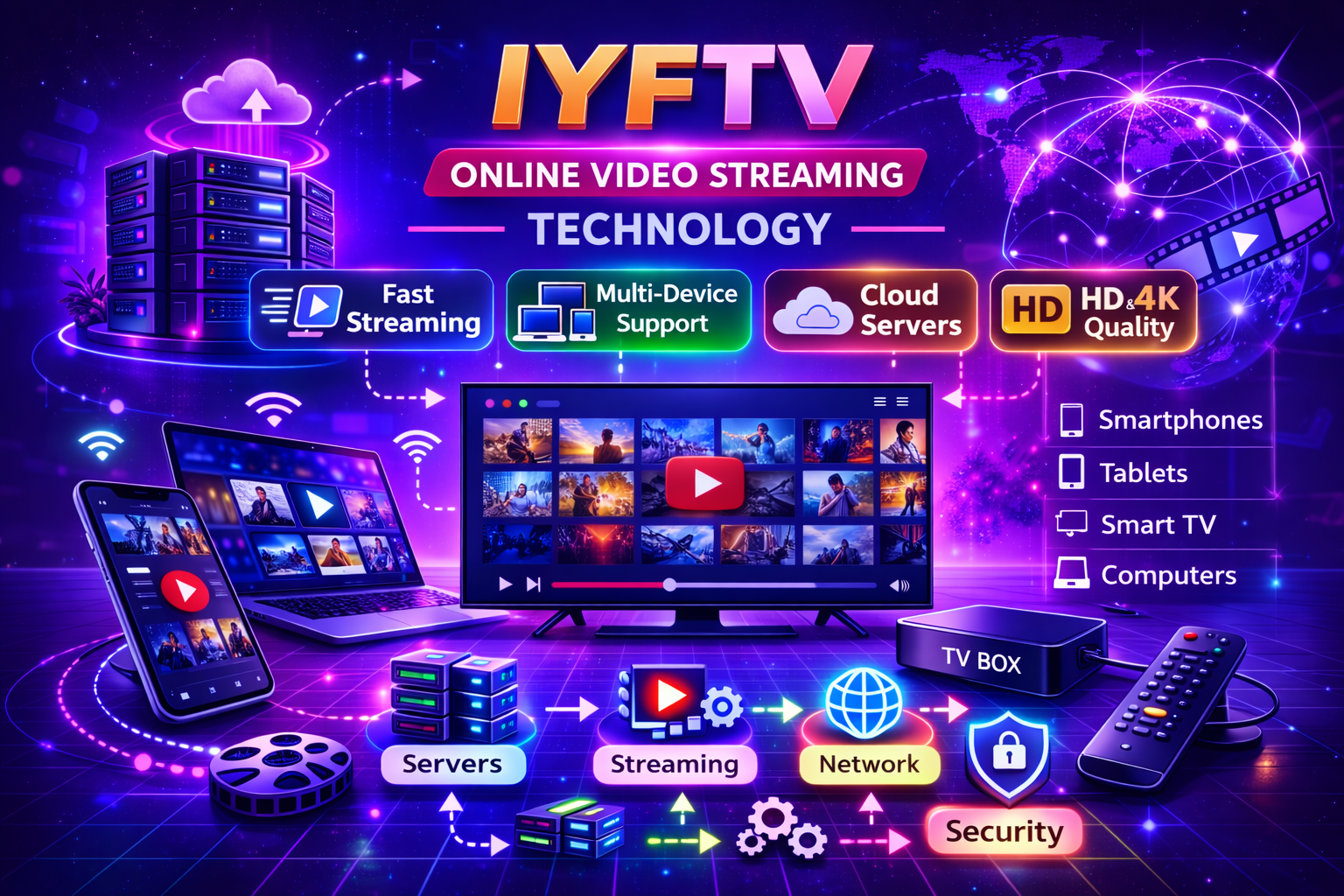
IYFTV is a term linked with modern online video streaming systems.
From a technical view iyftv is a platform model that delivers video through the internet to many devices.
This article explains iyftv using simple English and clear technical points.
The focus is only on technology and system design.
Table of Contents
ToggleIYFTV works as an internet video delivery system.
It sends video from servers to user devices in real time.
The system uses cloud services and streaming methods.
Main technical goals of iyftv
Fast video delivery
Stable playback on all devices
Low buffering on slow networks
Secure data transfer
Scalable server system
Many users also explore platforms such as Dopebox for online video access
The iyftv platform is built from several technical parts.
Each part works together to deliver video.
Main system parts
Video storage layer
Streaming engine
Application layer
Network delivery layer
Monitoring layer
System process flow
1 Video is uploaded to servers
2 Video is converted into many sizes
3 Video is stored in cloud storage
4 User device requests video
5 Video streams to the device
Servers manage video storage and video delivery.
They handle user requests and traffic load.
Server functions
Store video files
Process video formats
Send video streams
Manage user sessions
Handle error recovery
Server types table
| Server Type | Function |
|---|---|
| Storage Server | Save video data |
| Streaming Server | Deliver video |
| Cache Server | Speed up access |
| Control Server | Manage sessions |
IYFTV systems encode video into many quality levels.
This helps users watch video on different networks.
Encoding goals
Reduce video file size
Improve loading speed
Support many devices
Save network data
Delivery steps
Video is split into parts
Each part is sent in order
Player loads parts in sequence
Video plays without full download
Quality level table
| Quality Level | Purpose |
|---|---|
| Low | Weak internet |
| Medium | Mobile viewing |
| High | Desktop screens |
| Ultra | Large screen display |
Apps are the main way users access iyftv.
Apps connect users to servers and play video.
App components
User interface
Video player module
Network manager
Data cache module
Error handler
App features list
Smooth video playback
Auto quality change
Resume playback
Device friendly layout
Network status detection
IYFTV works on many devices.
Each device has different hardware abilities.
Supported device types
Mobile phones
Tablet devices
Smart TV units
Media boxes
Desktop systems
Hardware support table
| Device | Hardware Use |
|---|---|
| Phone | Touch input and GPU |
| Tablet | Larger display support |
| Smart TV | Remote input and decoder |
| Media Box | Video chip support |
| Desktop | CPU and GPU decoding |
Hardware benefits
Faster video decoding
Lower power use
Better image quality
Smooth playback
Network quality affects video playback.
IYFTV systems adjust to network speed.
Network control features
Speed detection
Quality adjustment
Buffer size control
Error recovery
Network handling steps
1 Check network speed
2 Set video quality
3 Start video buffer
4 Adjust quality on change
5 Recover on network loss
Network state table
| Network State | System Action |
|---|---|
| Strong | High quality video |
| Medium | Medium quality video |
| Weak | Low quality video |
| Drop | Pause and recover |
Caching improves video load speed.
Cached data reduces server load.
Caching goals
Faster access to video
Reduced network traffic
Better user experience
Stable playback
Caching layers
Device cache
Edge server cache
Core server cache
Cache process
1 Video data is stored near user
2 Device loads data from cache
3 Server load is reduced
4 Playback becomes smoother
Security protects data and system access.
IYFTV uses basic security layers.
Security elements
Secure network connections
Encrypted session data
Access control rules
Server authentication
Security tasks list
Protect user data
Prevent fake access
Secure data transfer
Reduce attack risk
Security layer table
| Security Layer | Purpose |
|---|---|
| Network Security | Protect data flow |
| App Security | Protect client |
| Server Security | Protect backend |
| Access Control | Limit permissions |
Monitoring helps keep the system stable.
It detects issues and performance drops.
Monitoring areas
Server health
Network delay
Playback errors
App crashes
Monitoring data table
| Metric | Use |
|---|---|
| Server load | Check system stress |
| Error count | Detect problems |
| Stream delay | Measure speed |
| Crash logs | Fix app issues |
Error handling steps
1 Detect error
2 Log error data
3 Restart service if needed
4 Notify monitoring system
5 Restore normal service
IYFTV systems organize video data.
This helps users find content fast.
Data management tasks
Store video metadata
Index content titles
Manage categories
Track viewing history
Search flow
1 User enters search term
2 System scans index data
3 Results are sorted
4 Results are shown on screen
Index type table
| Index Type | Function |
|---|---|
| Title Index | Search by name |
| Tag Index | Search by topic |
| Category Index | Group content |
| History Index | Track recent items |
IYFTV platforms change over time.
Updates improve speed and stability.
Update goals
Fix bugs
Improve performance
Add support for new devices
Improve security
Update process
1 Test new code
2 Deploy to servers
3 Release to apps
4 Monitor system state
Maintenance tasks
Server cleanup
Cache refresh
Log file management
Performance tuning
IYFTV systems must support many users.
Scalability helps the system grow.
Scalability features
Auto server scaling
Load balancing
Traffic routing
Backup service activation
Load handling steps
1 Detect high traffic
2 Add more server resources
3 Distribute user load
4 Maintain playback quality
Scalability data table
| Area | Purpose |
|---|---|
| Load balancer | Share traffic |
| Auto scaling | Add servers |
| Backup service | Handle failure |
| Traffic routing | Reduce delays |
Streaming technology continues to grow.
IYFTV systems will adopt new technical methods.
Future focus areas
Faster video codecs
Lower data usage
Smarter caching
Better network control
Stronger security layers
Future system goals
Faster video start
Less buffering
Higher image quality
Better device support
Stable performance
IYFTV represents a modern internet streaming system built with servers apps networks and devices.
The system uses streaming methods to send video in real time.
It adjusts video quality based on network speed.
It supports many device types and uses hardware decoding for smooth playback.
Security monitoring and updates keep the platform stable and safe.
From a technical view iyftv is based on cloud infrastructure video encoding network optimization and multi device app design.
Future iyftv systems will focus on faster delivery better stability and improved security for users.

Riku Ayanami is a writer and pop media enthusiast who explores the vibrant worlds of manga, anime, entertainment, and global pop culture. With a passion for storytelling and visual art, Riku dives into the latest series, character arcs, fan theories, and industry trends—offering fresh insights and engaging commentary for fellow fans.
Riku Ayanami is a writer and pop media enthusiast who explores the vibrant worlds of manga, anime, entertainment, and global pop culture. With a passion for storytelling and visual art, Riku dives into the latest series, character arcs, fan theories, and industry trends—offering fresh insights and engaging commentary for fellow fans.